
Change Management & Continuous Improvement
I partner with NCDPI districts to turn district priorities into sustainable systems, strengthen implementation, and build the capacity needed to achieve measurable improvements in student outcomes.

The Work at a Glance
In my current role with the North Carolina Department of Public Instruction (NCDPI), I support districts as they move from identifying a need to building the capacity, structures, and actions required to implement meaningful improvement.
Align people around a shared purpose by engaging leaders and stakeholders in identifying needs, priorities, and desired outcomes.
Translate priorities into action by developing practical strategies, processes, and structures that guide implementation.
Build capacity for implementation through targeted coaching, professional learning, and individualized support.
Identify and address barriers by using data, collaboration, and stakeholder insight to strengthen implementation.
Monitor progress and refine strategies to ensure improvement efforts remain responsive, aligned, and focused on student outcomes.
My approach ensures that change is not simply introduced. It is understood, implemented, supported, and sustained.
Confidentiality Notice: Artifacts have been redacted to protect personally identifiable, confidential, and/or proprietary information. Redactions do not alter the substance of the evidence or the leadership work demonstrated.
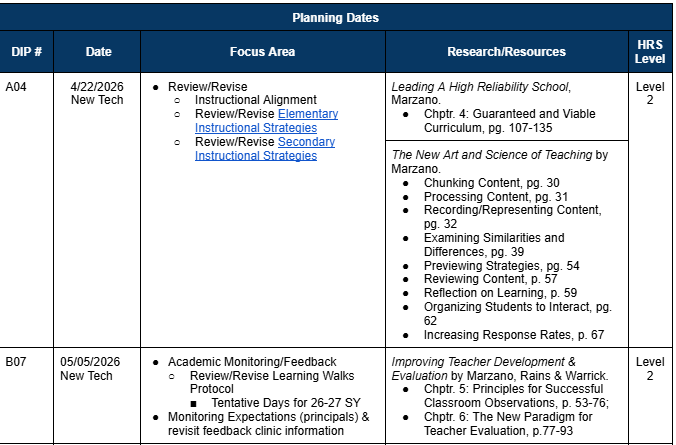
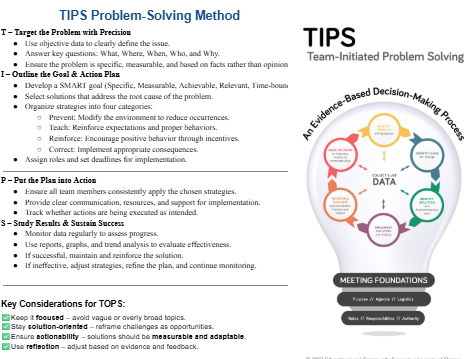
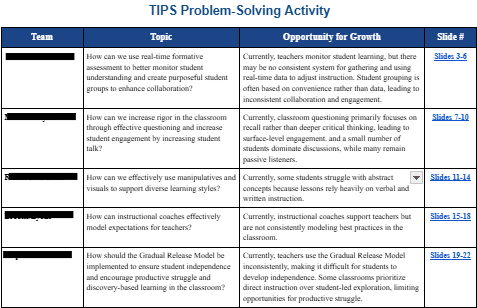
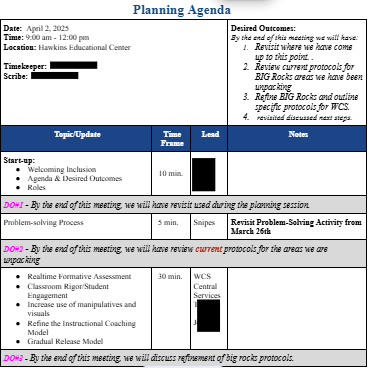
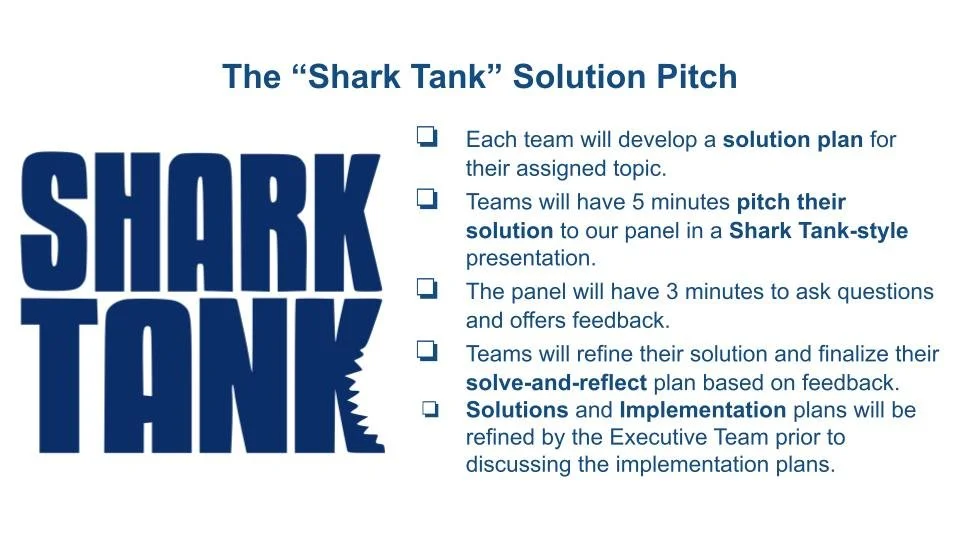
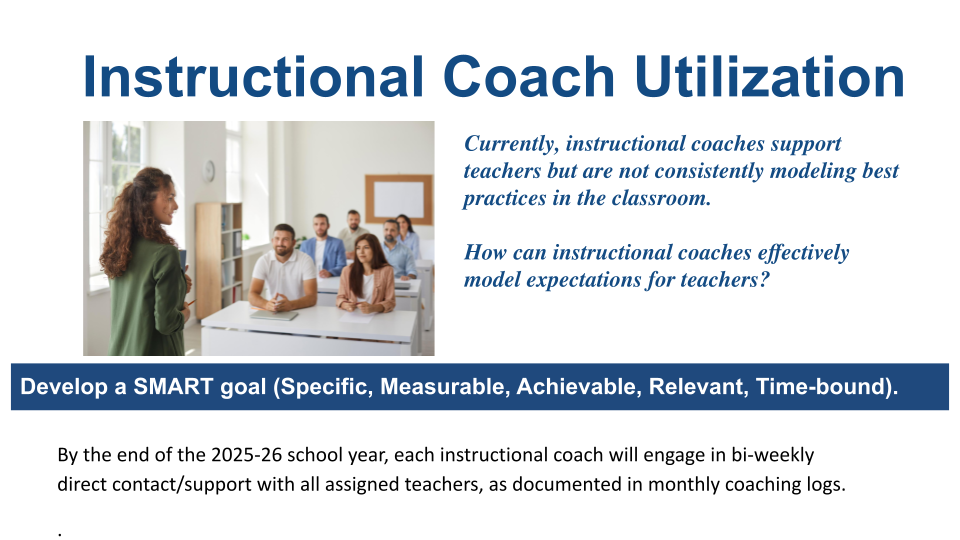
The district needed a structured approach to identify and prioritize the most critical areas for change. Multiple sources of information, including CALL data and instructional walkthrough data, were used to identify patterns, gaps, and opportunities for improvement. This process resulted in the identification of five “Big Rocks” that became the focus for implementation. The artifacts listed includes the planning agenda, TIPS protocol used and SharkTank solution planning activity.,
I supported the district in moving from data identification to an actionable change plan. My role was to help leaders prioritize the most critical needs, establish a clear implementation structure, facilitate collaborative problem-solving, and maintain momentum throughout the change process.
The strategy began with unpackig the CALL results and walkthrough data to identify the five Big Rocks, followed by the development of a planning schedule that established a clear sequence for implementation. The TIPS problem-solving protocol was used to examine challenges, identify root causes, and develop targeted solutions. Teams then participated in a Shark Tank solution presentation, providing an opportunity to collaboratively develop, communicate, and refine proposed solutions.
To sustain momentum, weekly and biweekly planning meetings were established to monitor implementation, address barriers, assess progress, and determine next steps. This approach created a structured process for moving the district from identifying areas of need to developing solutions and implementing, monitoring, and refining the changes necessary to support progress. From January - June, district leadership revisited the planning approach for the 2026-2027 school year in order to ensure protocols were embedded in the districts operational processes.
Evidence 1: planning for change
Evidence 2: changing districtwide walkthroughs
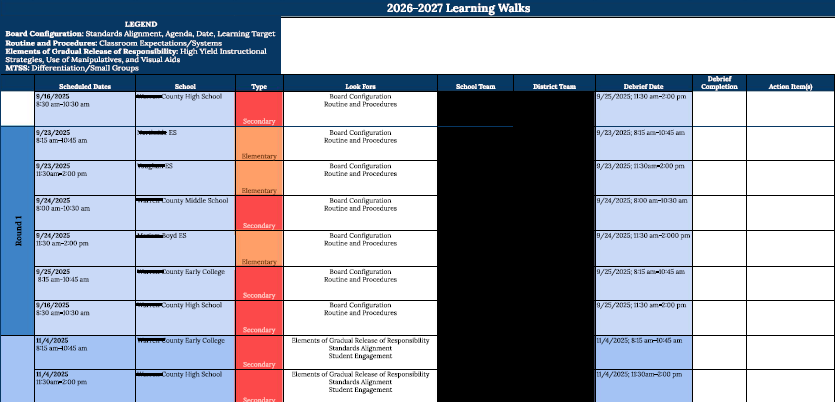
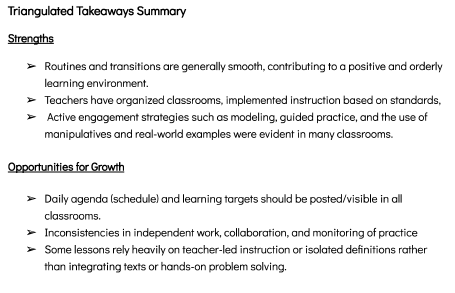
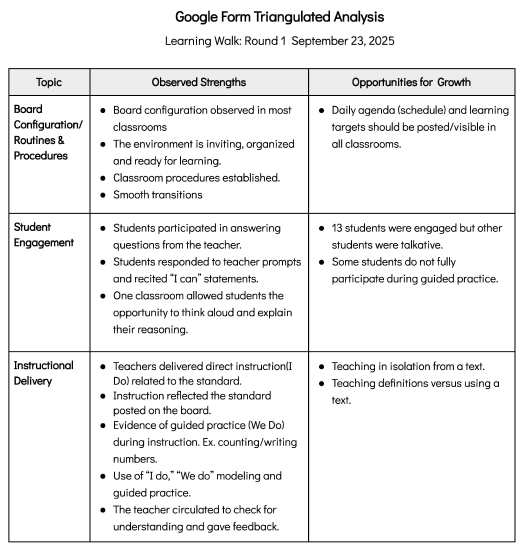
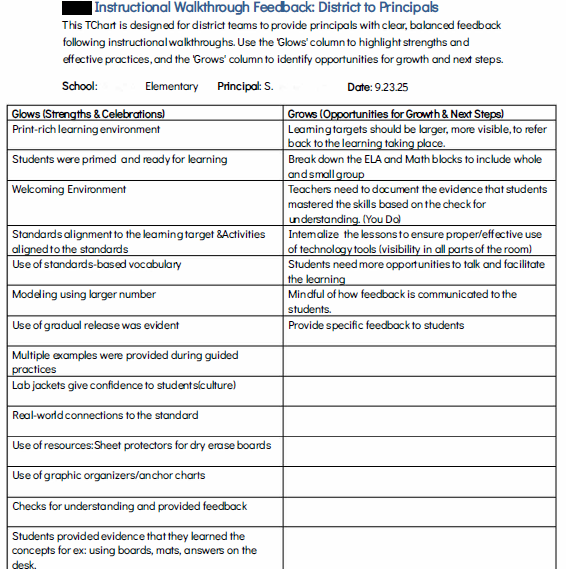
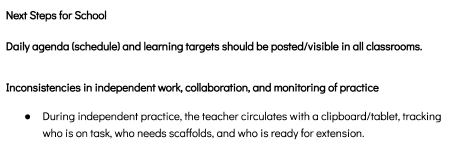
The district did not have a consistent, structured process for conducting instructional walkthroughs. Walkthroughs were not guided by an annual schedule or a common process for collecting and using feedback, limiting the district’s ability to consistently monitor instructional practices and identify opportunities for support.
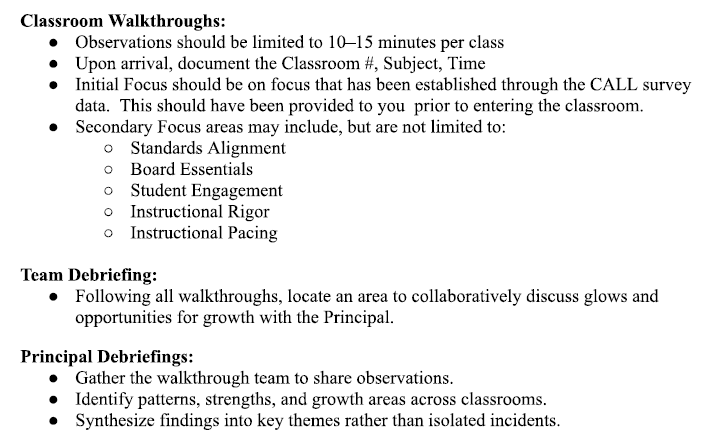
I supported the district in moving from an informal approach to a more structured, predictable, and sustainable walkthrough process. My role was to help establish the systems, develop stakeholder understanding, and build the leadership capacity needed to implement the change consistently across schools.
The change strategy focused on structure, stakeholder voice, capacity building, and follow-through. I supported the development of an annual walkthrough schedule, incorporated feedback from both district and school leaders, and established a more consistent process for conducting and communicating walkthroughs. Principals were trained on the expectations and purpose of the process, while instructional coaches were positioned to provide follow-up support based on identified instructional needs. This established a continuous cycle of walkthroughs, feedback, coaching, and follow-up, transforming walkthroughs from an observation activity into a vehicle for continuous improvement.
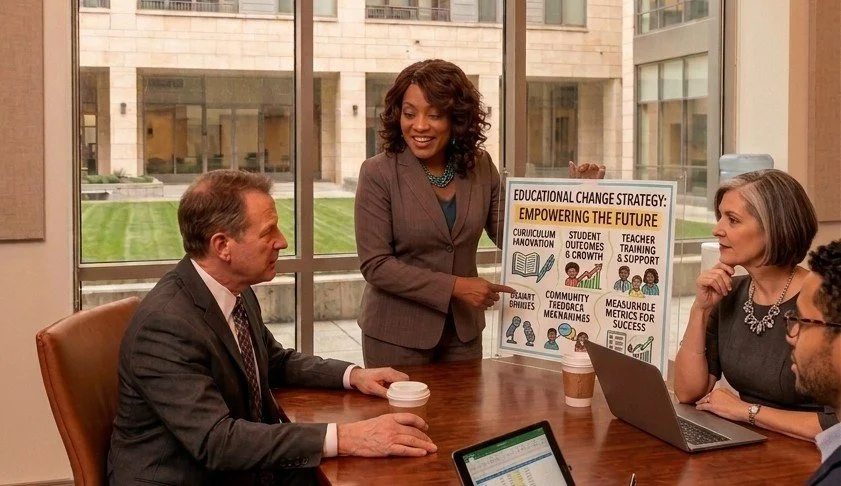
i empower Districts to
dream big… EMBRACE CHANGE…
and ACCELERATE STUDENT GROWTH.
REFLECTION
This work reinforced for me that sustainable change requires more than identifying areas of need—it requires structure, shared ownership, and consistent follow-through. Key takeaways from this work include:
Structure creates consistency: Clear schedules, protocols, and expectations helped establish a predictable improvement process.
Data drives meaningful change: Walkthrough data provided a shared foundation for identifying and prioritizing the district’s most critical needs.
Stakeholder voice strengthens ownership: Engaging district and school leaders in problem-solving and solution development increased collective responsibility for implementation.
Capacity building supports sustainability: Training leaders and positioning coaches for follow-up support helped build the internal capacity to sustain the work.
Continuous monitoring matters: Weekly and biweekly planning conversations created opportunities to address barriers, assess progress, and refine implementation.
Ultimately, the work shifted the district from operating in a reactive problem-solving mode to intentionally building systems for continuous improvement.