
District Improvement & Strategic Planning
I support district leaders in translating identified needs and evidence into focused improvement priorities, coordinated strategies, and actionable plans that strengthen systems and improve outcomes.
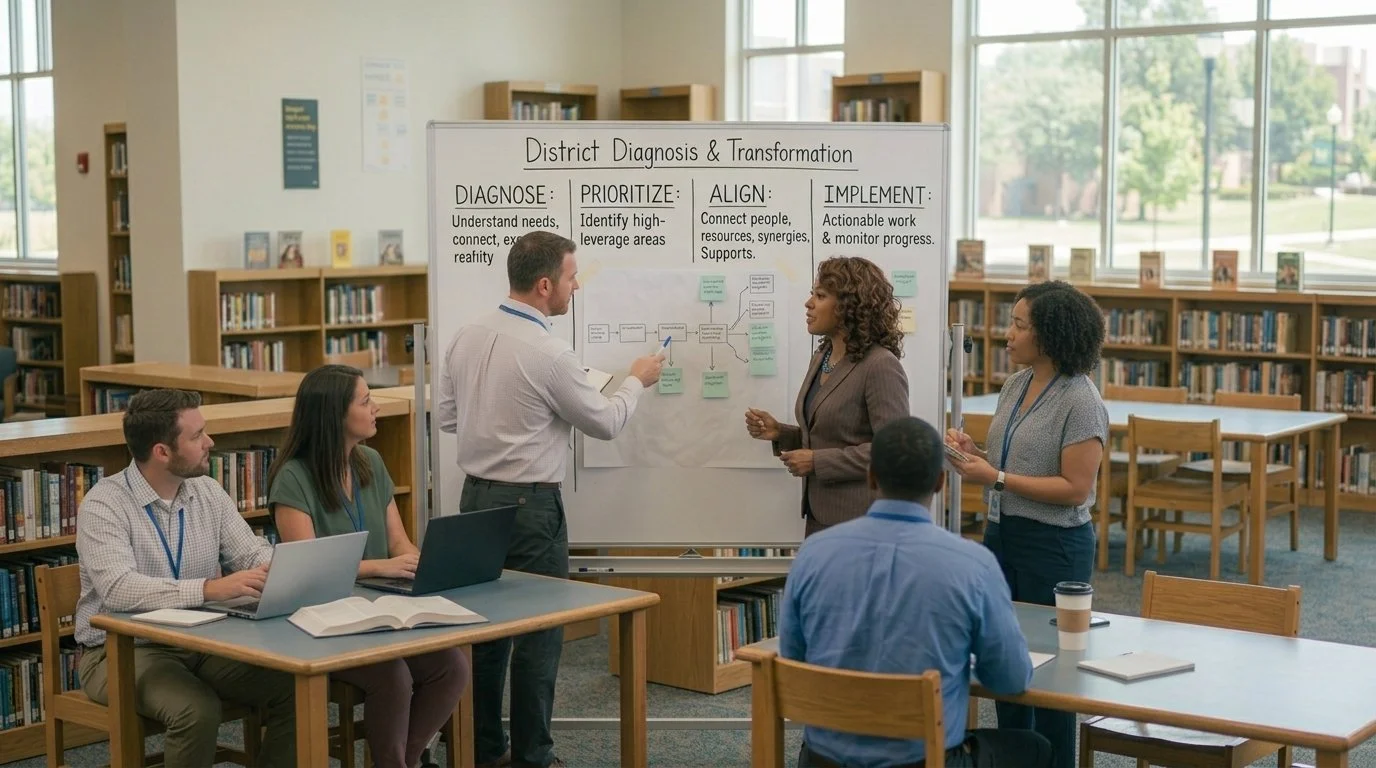
The Work at a Glance
In my current role with the North Carolina Department of Public Instruction (NCDPI), I serve as a strategic partner to districts as they navigate complex improvement priorities. I work directly with superintendents and district administrators to:
Understand their most pressing challenges,
Examine existing systems and practices,
Determine where targeted support can have the greatest impact.
Develop a plan of action to improve systems and practices
Aid in the implementation process, and
Support the district as they develop progress monitoring tools
I also engage district and school instructional coaches and collaborate with NCDPI teams and content experts to bring the right expertise and resources to each context.
From these partnerships, I help translate identified needs into customized scopes of work and coordinated improvement efforts that build district capacity, strengthen implementation, and move systems toward improved outcomes for students.
Confidentiality Notice: Artifacts have been redacted to protect personally identifiable, confidential, and/or proprietary information. Redactions do not alter the substance of the evidence or the leadership work demonstrated.
Evidence 1: Entry into Priority partnership
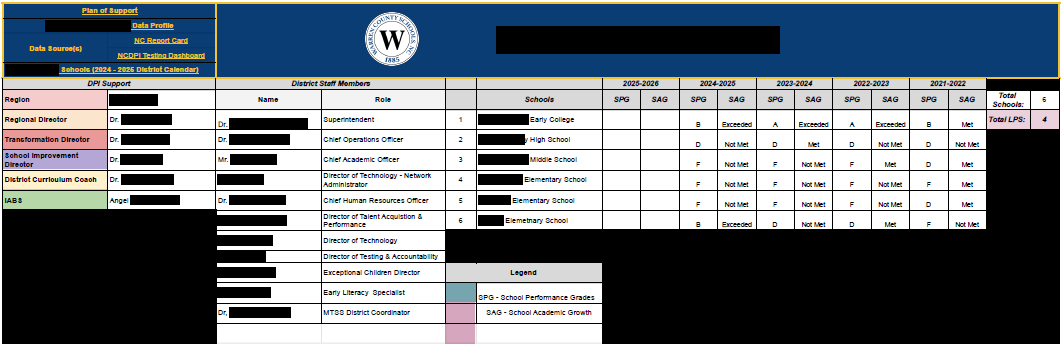
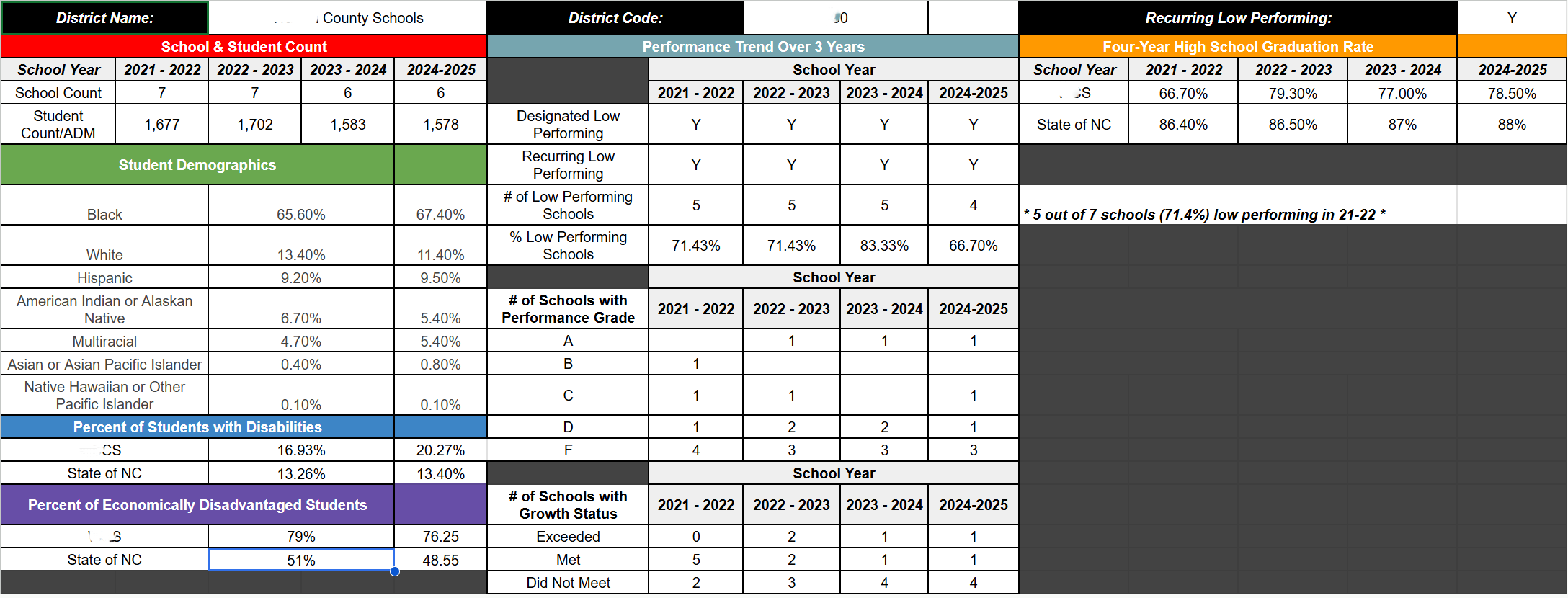
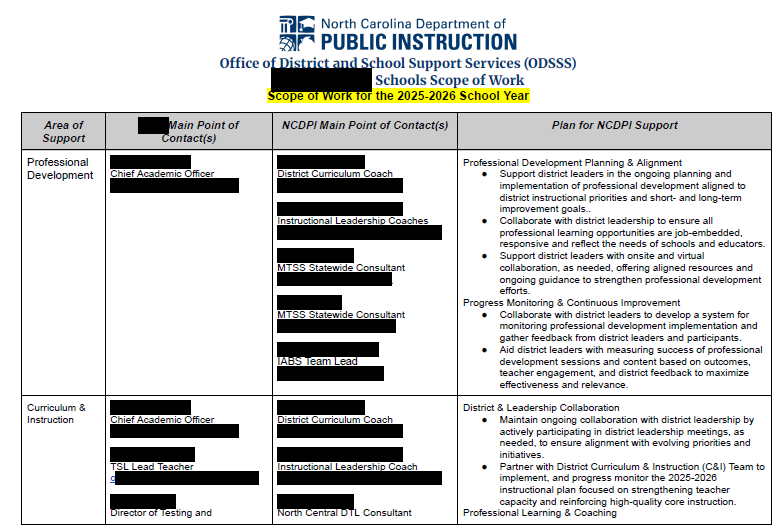
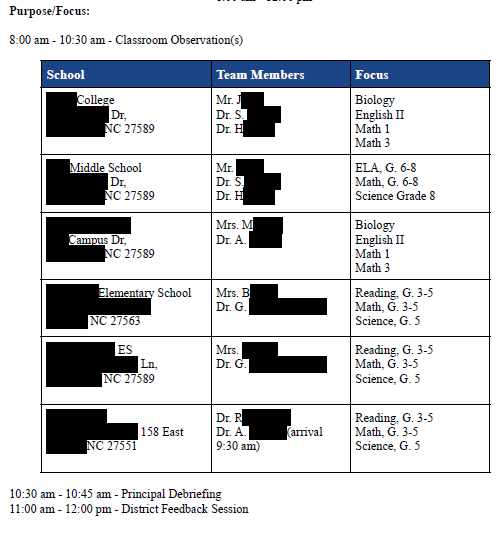
The artifacts represent the district improvement process from understanding the current state to identifying priorities for action. District-level data from 2021–2025 and school-level performance data provided a clear picture of trends, areas of need, and opportunities for improvement.
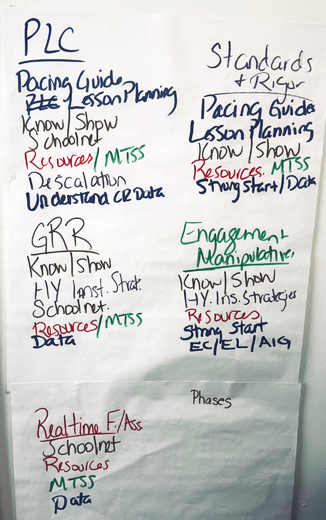
I collected school and district data, identifying patterns, and moving from broad areas of concern toward focused improvement. I connected with cross-functioal members of NCDPI to identify prior supports being provided in the district and I served as a thought partner and facilitator, helping the district internal leadership team organize ideas, ask meaningful questions, and establish a structure for the work.
Using the data and collaborative discussions, we developed a walkthrough schedule to gather additional evidence, refine the scope of work to clarify priorities and support, and facilitated brainstorming that resulted in five focus groups. This approach allowed the district to move from identifying challenges to creating focused opportunities for action and collective ownership.
Evidence 2: redefining the pLC
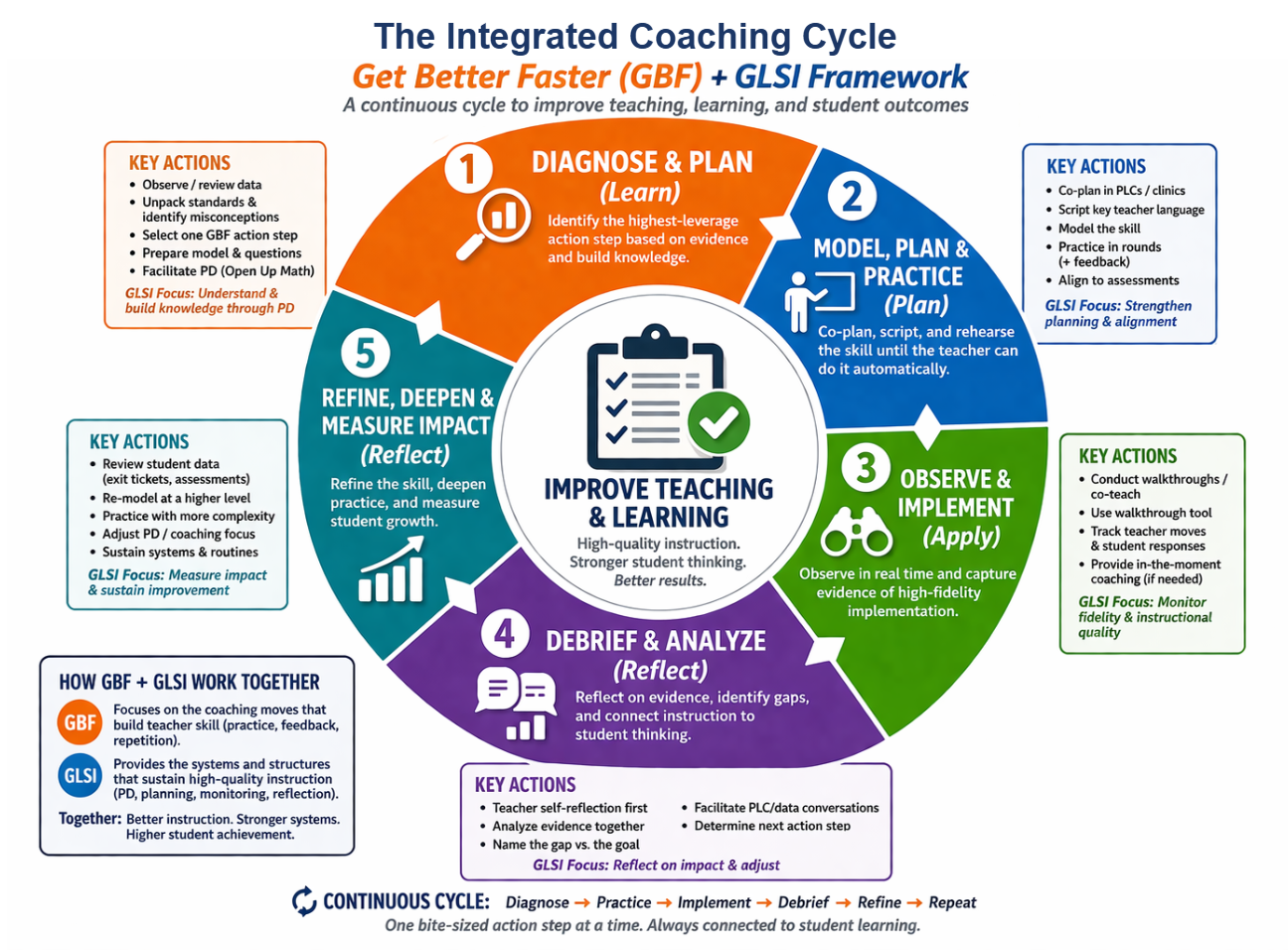
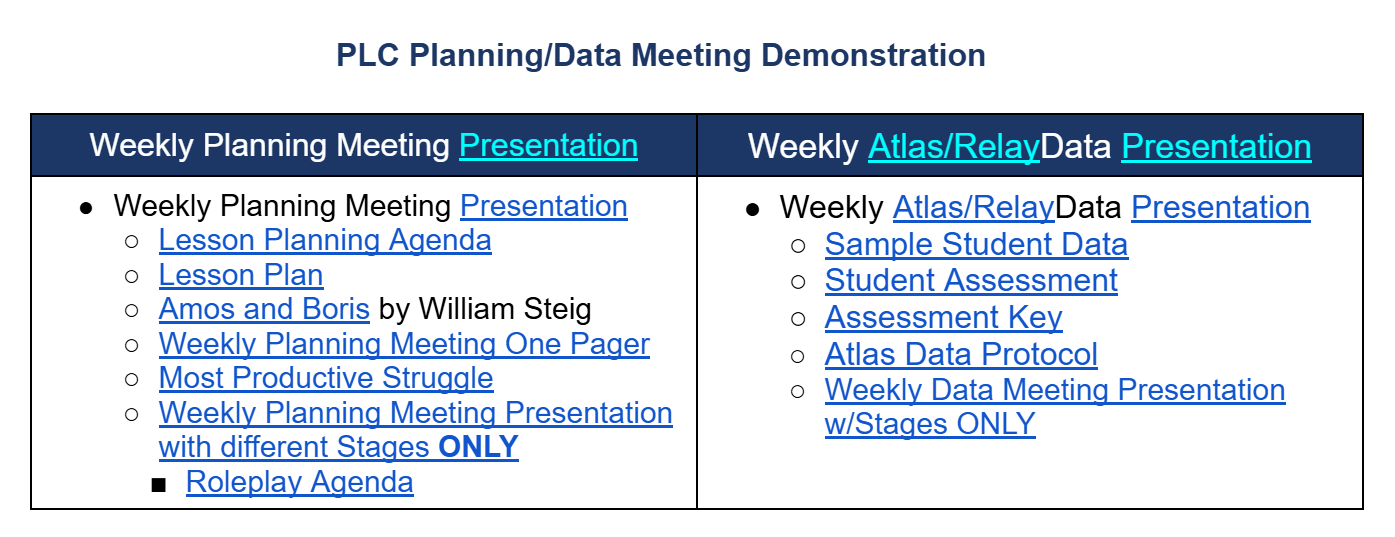
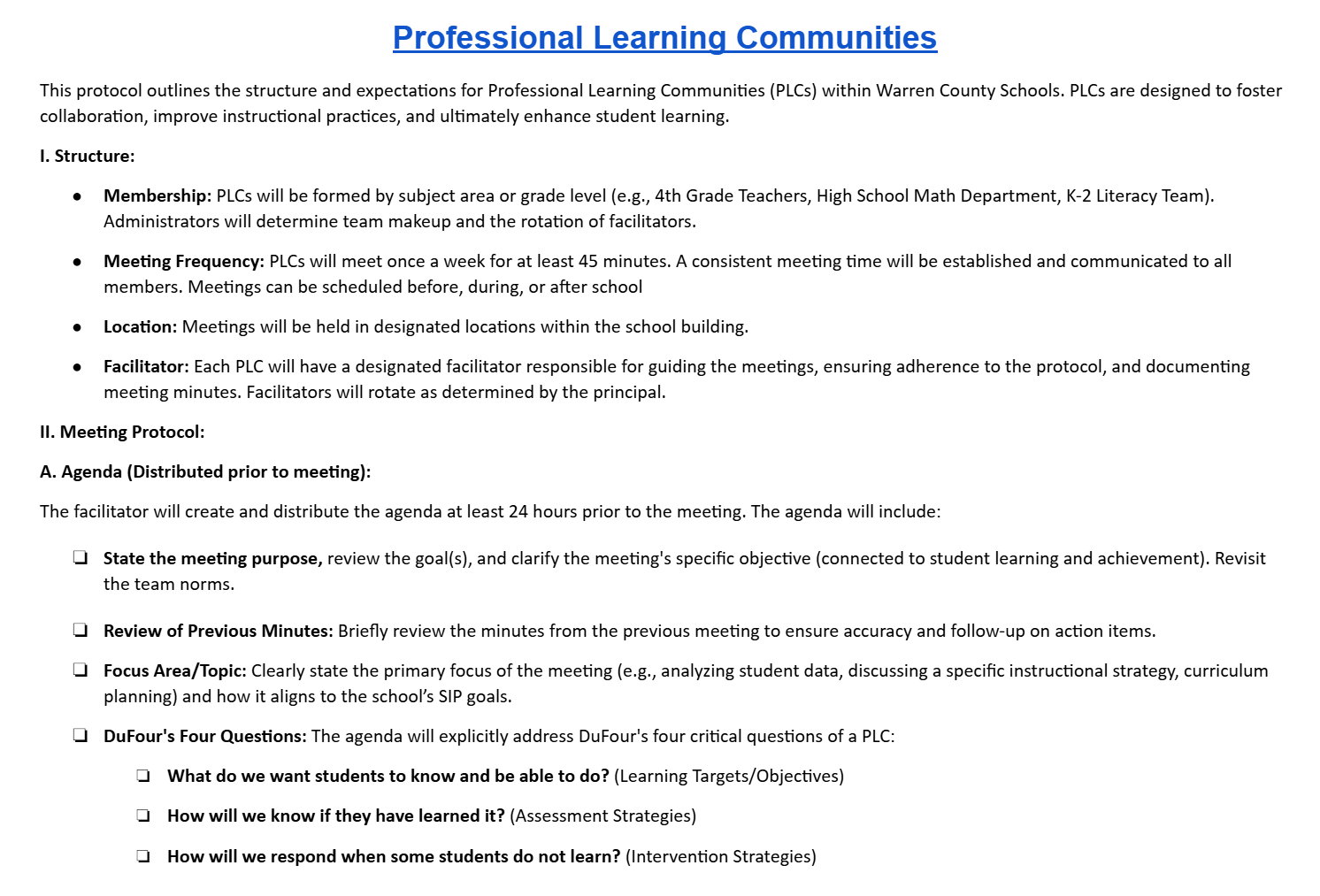
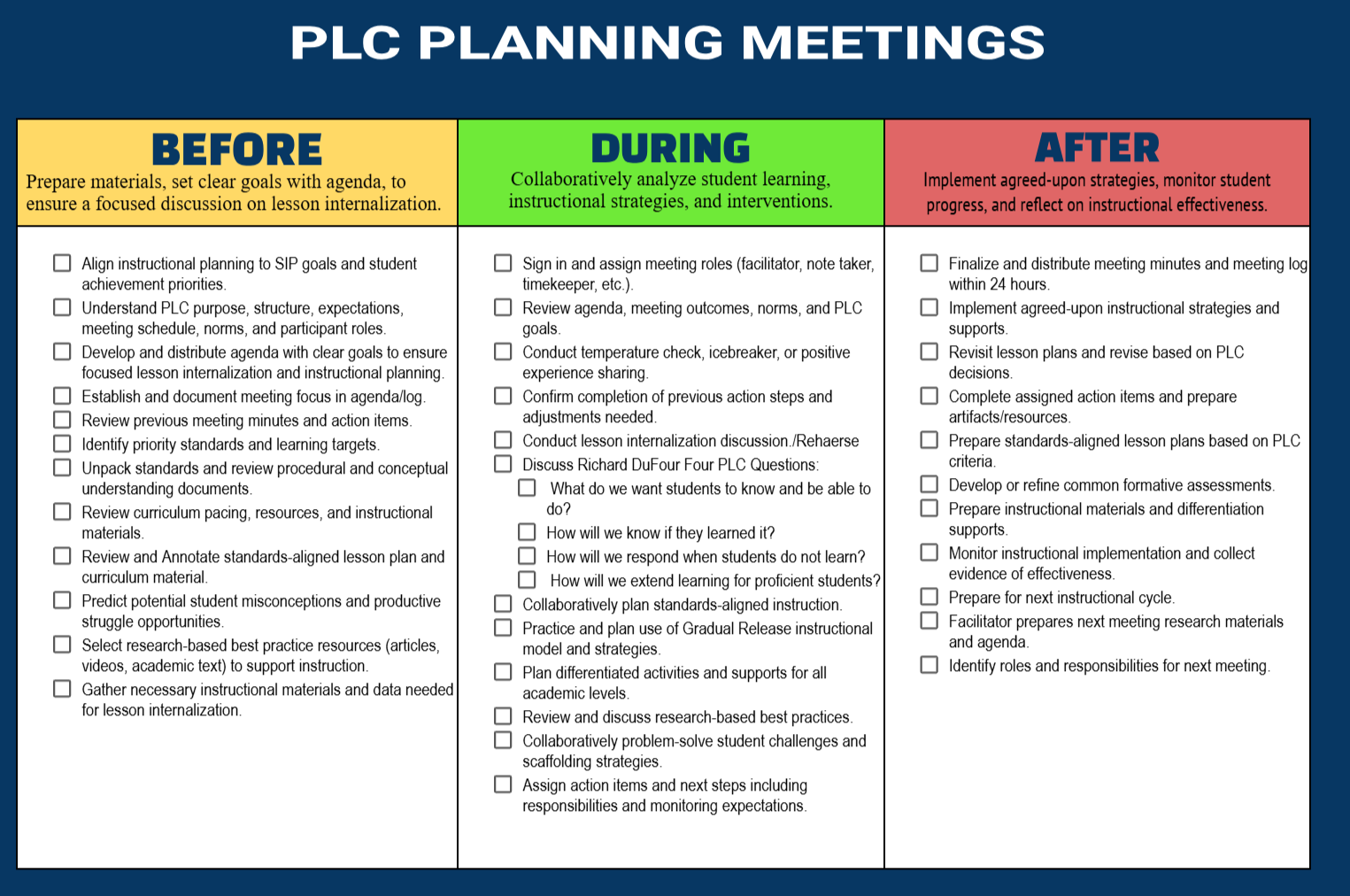
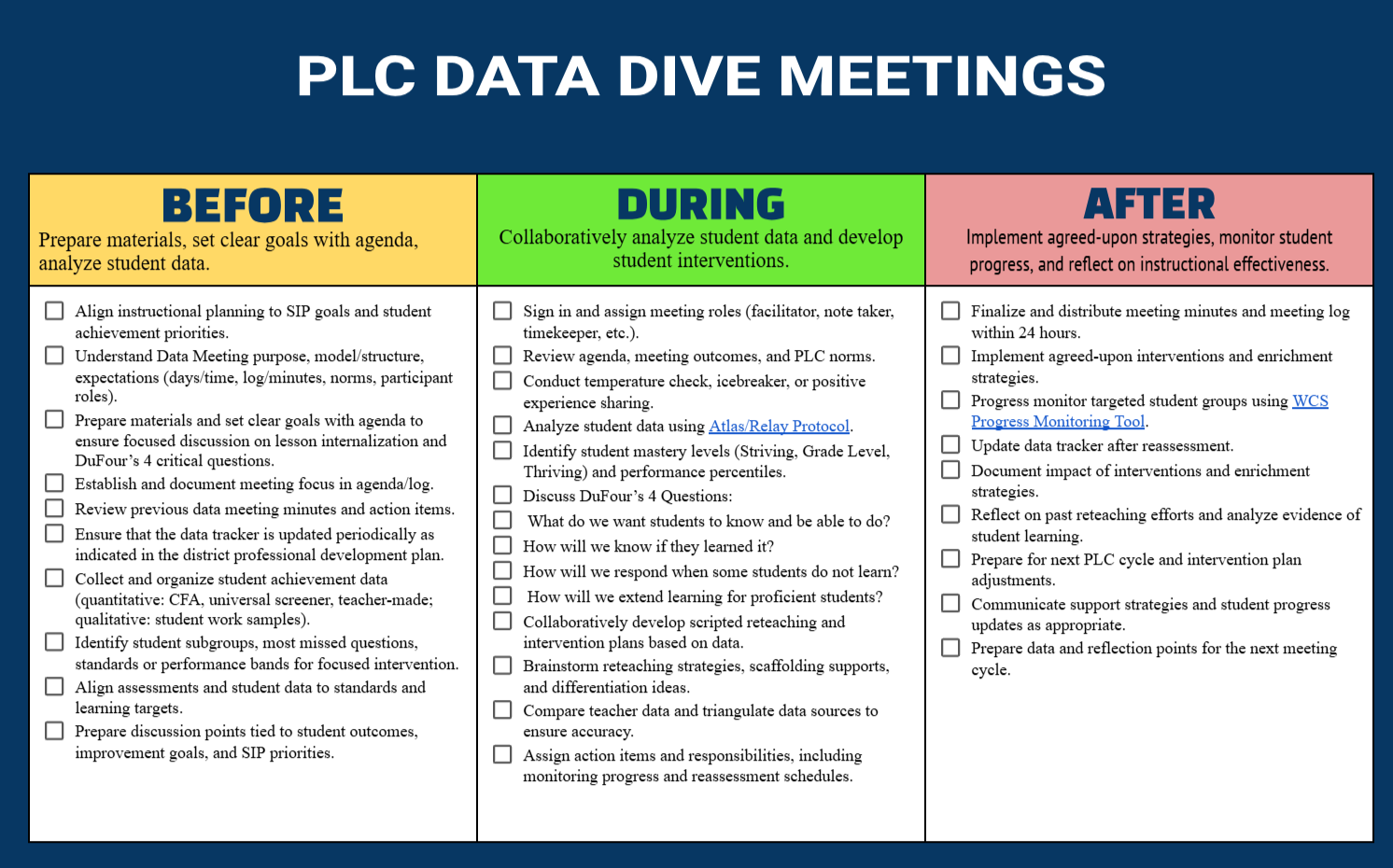
The district faced disconnected instructional planning systems, operating in silos across PLC frameworks, confusion understanding how the district adopted Relay/GSE model aligned with the new High Reliability Schools (HRS) framework, and day-to-day lesson delivery. Teachers and leaders lacked a unified language and streamlined workflow, leading to initiative fatigue and inconsistent classroom execution.
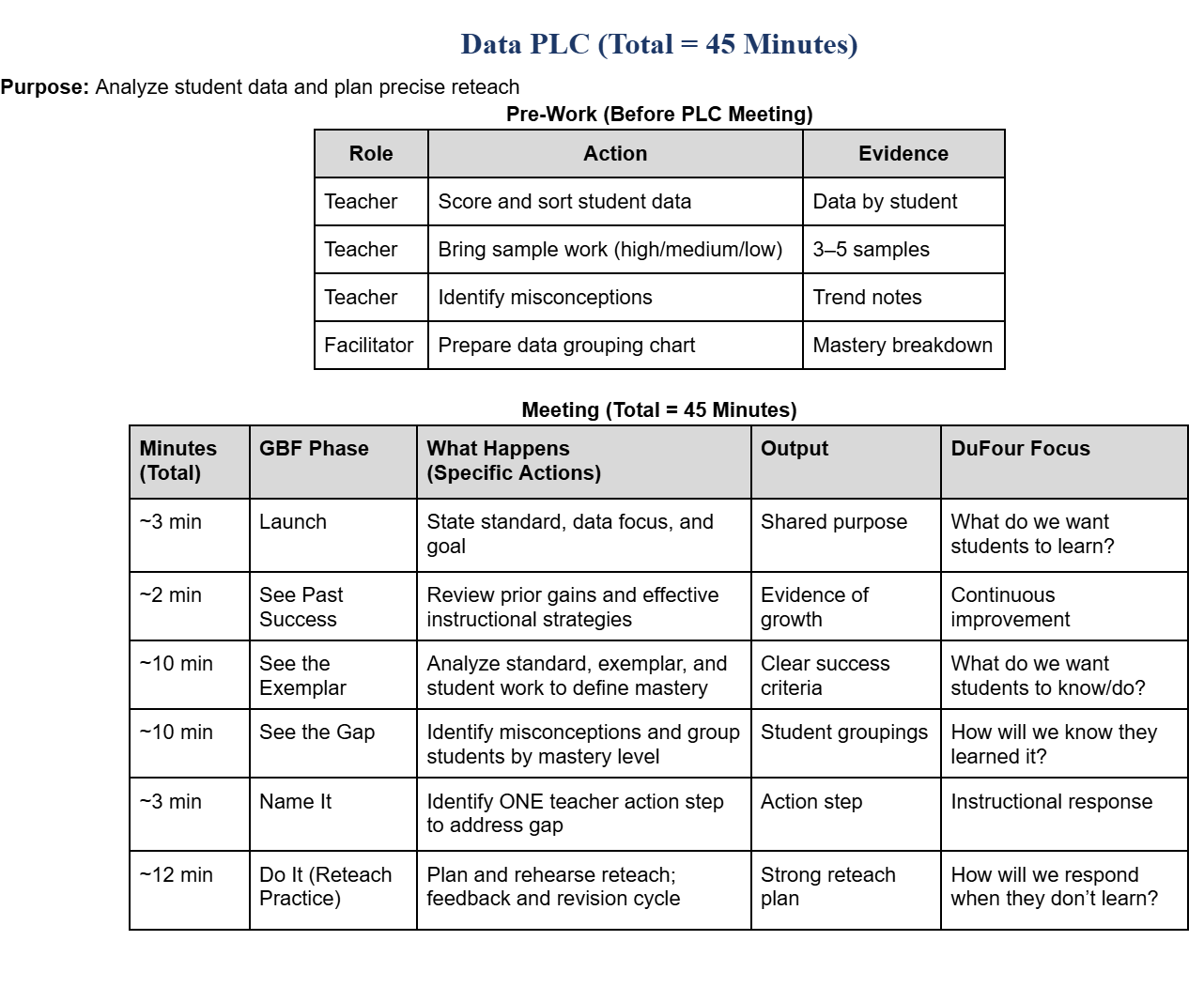
I partnered with district leaders to design, synthesize, and operationalize the district’s core planning process. I bridged high-level strategic frameworks and demonstrate d how these cold be implemented in daily teacher practice. I collaborated with district leaders and instructional coaches to develop a single-source PLC resource, merge HRS and Relay/GSE initiatives into cohesive guidance tools, and aided leaders developoing user-friendly planning templates. In addition, I modeled the process of moving through weekly data and planning meetings using various case studies.
I helped district leaders step back and connect the dots between the district priorities and day-to-day teaching. We outlined our big rocks and categorized items that would fall under different categories. Together, we looked at how Relay/GSE practices and High Reliability Schools standards overlapped, and I guided them into a clear coaching process and PLC One-Pagers. We also worked out a clear game plan for assuring every school in the district was speaking the same language by housing all PLC resources in the Coaching Playbook and having coaches facilitate PLCs. From there, I coached the coaching team and guided them through understanding how to structure 45-Minute Weekly Data and Planning Meeting. The goal was to help them give teachers realistic, lightweight tools that make planning high-impact lessons feel manageable within a normal class period.
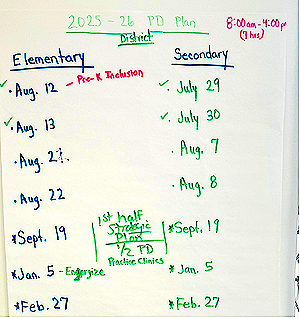
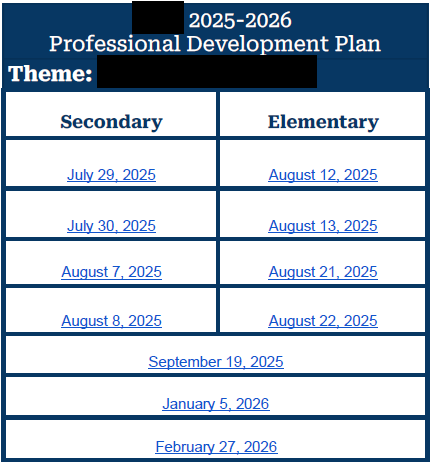
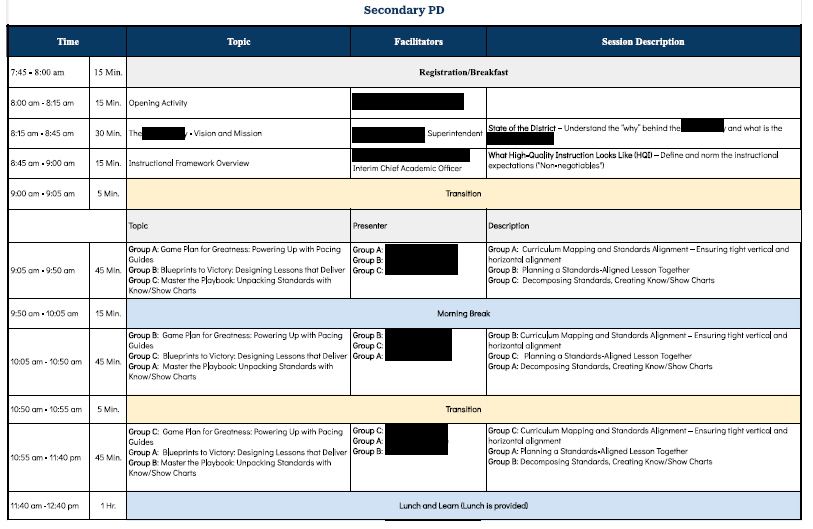
The artifacts represent the development of a yearlong professional learning plan aligned to district initiatives and the needs of both elementary and secondary educators. The process included identifying available professional development days, establishing the time dedicated to professional learning from 8:00 a.m.–4:00 p.m., and considering topics that would best support district priorities.
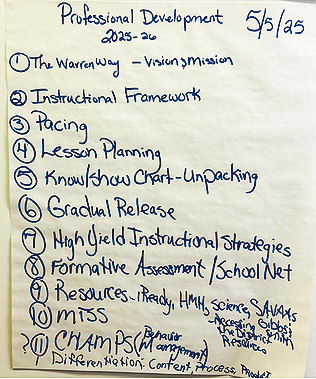
I partnered with district leaders to develop a process for approaching deelopment of an annual professional learning plan. This included identifying potential areas of focus and creating a structure that connected professional development to district initiatives. I helped move the team from brainstorming individual topics to developing a cohesive yearlong professional learning plan. I also assisted district leaders by faciliating a lessons learned session in preparation for their 2026-2027 professional learning planning session.
The planning process began with brainstorming potential professional development topics and determining whether each session should serve elementary, secondary, or both audiences. Topics were considered in relation to district initiatives and identified areas of need. An evaluation process was also developed to analyze each professional learning session and gather evidence to inform future planning. These components were ultimately organized into a finalized yearlong professional development schedule, providing the district with a clear and intentional roadmap for professional learning.
Evidence 3: preparing for annual professional learning
i empower Districts to
dream big… EMBRACE CHANGE…
and ACCELERATE STUDENT GROWTH.
REFLECTION

Sustainable district improvement depends on building leadership capacity. Working through this strategic planning process reinforced three key principles:
Coherence Over Complexity: Sustainable progress happens when you align existing priorities, whether merging instructional models (Relay/GSE and HRS) or structuring a professional learning calendar around clear district goals.
Co-Design Drives Ownership: True transformation occurs when leaders co-create solutions. Two minds are always better than one. Facilitating authentic discussions and "lessons learned" sessions empowers district develope and own their growth strategy.
Strategy Must Connect to Execution: Broad yearlong plans only matter if they simplify the daily work,